Gold in Southern Africa
Geology, Zimbabwe’s formal gold supply chain, metal quality and responsible sourcing — explained in one regional guide.
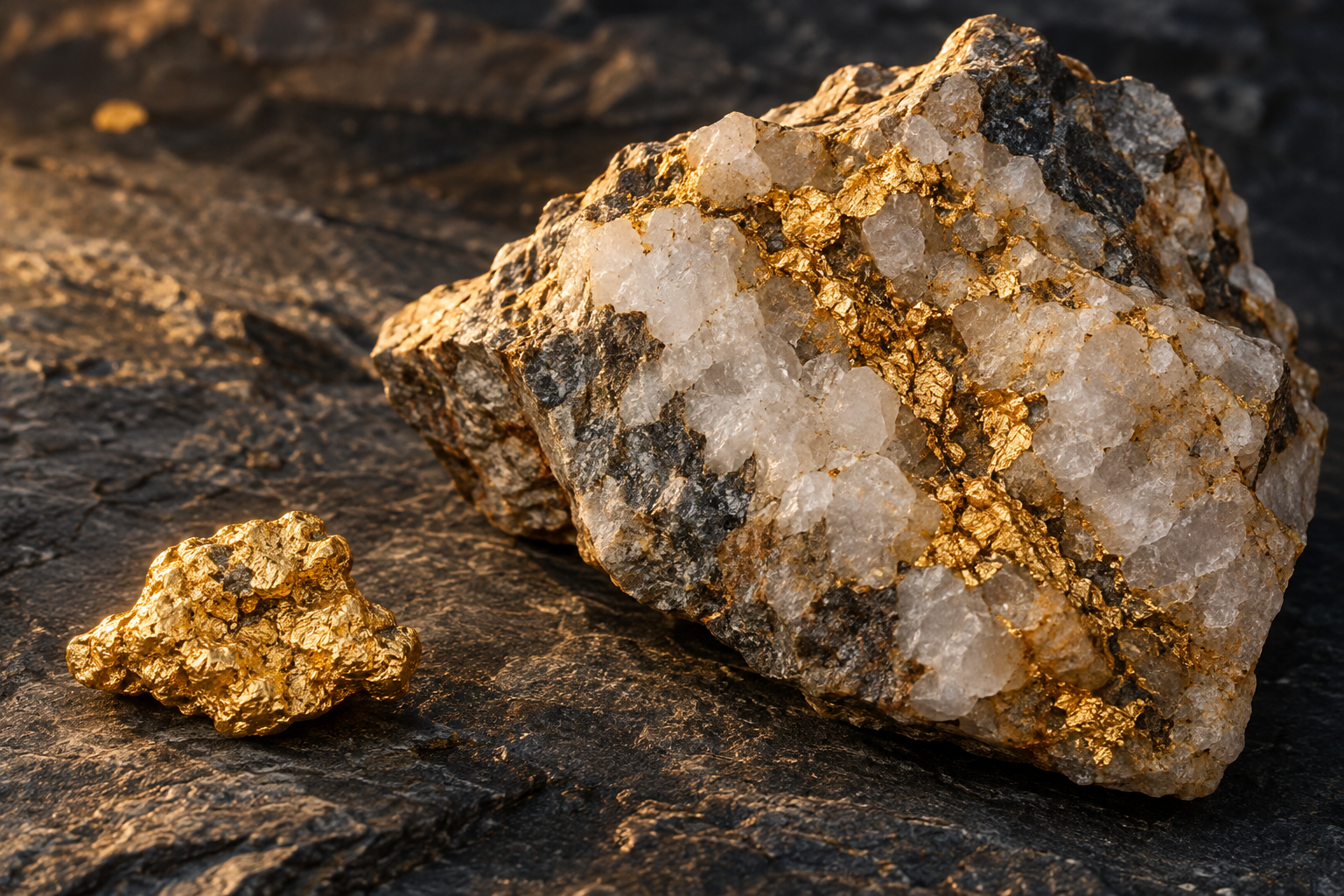
Why the region matters
Southern Africa contains several different gold-bearing geological environments. Zimbabwe is strongly associated with ancient greenstone belts: the Zimbabwe government’s mining overview links the great majority of its recorded gold deposits to these rock formations. A gold occurrence, however, is not the same as an economically mineable reserve.
South Africa’s Witwatersrand is a different geological story, known for gold-bearing ancient conglomerates. The US Geological Survey describes these as quartz-pebble-conglomerate deposits, generally interpreted as ancient placer accumulations subsequently altered by geological processes.
Namibia adds another established gold-producing jurisdiction. B2Gold’s Otjikoto operation is one documented example; the operator’s technical information provides a useful window into how a formal mine reports geology, production and project development.
Zimbabwe: production and the formal market
Zimbabwe’s sector includes large mines as well as artisanal and small-scale producers. Fidelity Gold Refinery describes its activities as gold buying and refining, including purchases from large producers, small producers and gold buying permit holders.
Fidelity’s published gold operations information explains its analysis and refining services. Its responsible sourcing policy also addresses traceability and the legitimacy of sources. These are important reference points for understanding the formal supply chain; they should not be read as permission for an unlicensed party to buy or export gold.
Country-specific requirements matter. Rules governing the right to acquire, hold, sell or export metal must be checked for the exact jurisdiction and transaction. A mining licence, a dealing authorisation and export documentation serve different purposes.
Understanding the material
| Term | What it means |
|---|---|
| Ore | Rock containing gold-bearing minerals. Its mass is not its recoverable gold content. |
| Doré | A partially refined alloy containing gold and other metals, commonly sent to a refinery. |
| Refined gold | Gold processed to a specified purity. Identity, assay and traceable documentation remain important. |
| Assay | An analysis of precious-metal content. Sampling and the method used affect how a result should be interpreted. |
| Fineness | Purity expressed in parts per thousand; 999 represents 99.9% gold content. |
Weight, purity and value are different
A gross weight includes everything in the material. Fine gold content depends on verified purity. An apparent discount to a quoted gold price is therefore not enough to establish value: the material, assay basis, fees and commercial terms must all be understood.
Traceability and responsible sourcing
The World Gold Council describes the movement of mined gold, often as doré, into refining. LBMA’s Responsible Sourcing Programme sets expectations for refiners on the legitimacy of supply chains. These resources explain why documented origin matters alongside metal quality.
A useful background review considers the identity of the parties, their relevant authorisations, the origin of the metal, analysis documentation and how custody is recorded. An industry-standard reference or a refinery name should never be treated as evidence that Aurelian Resources LTD is accredited by, affiliated with or authorised to represent that organisation.
Sources & further reading
Independent reference links, not endorsements or claims of partnership. Availability, market conditions and requirements can change.